Why we freeze our juice
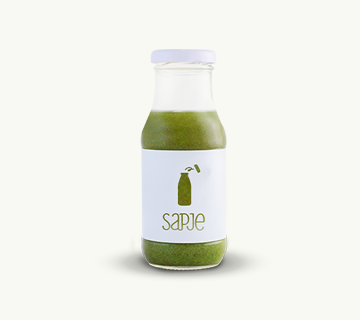
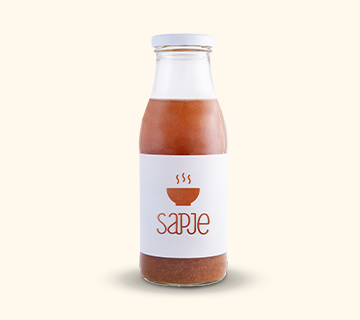
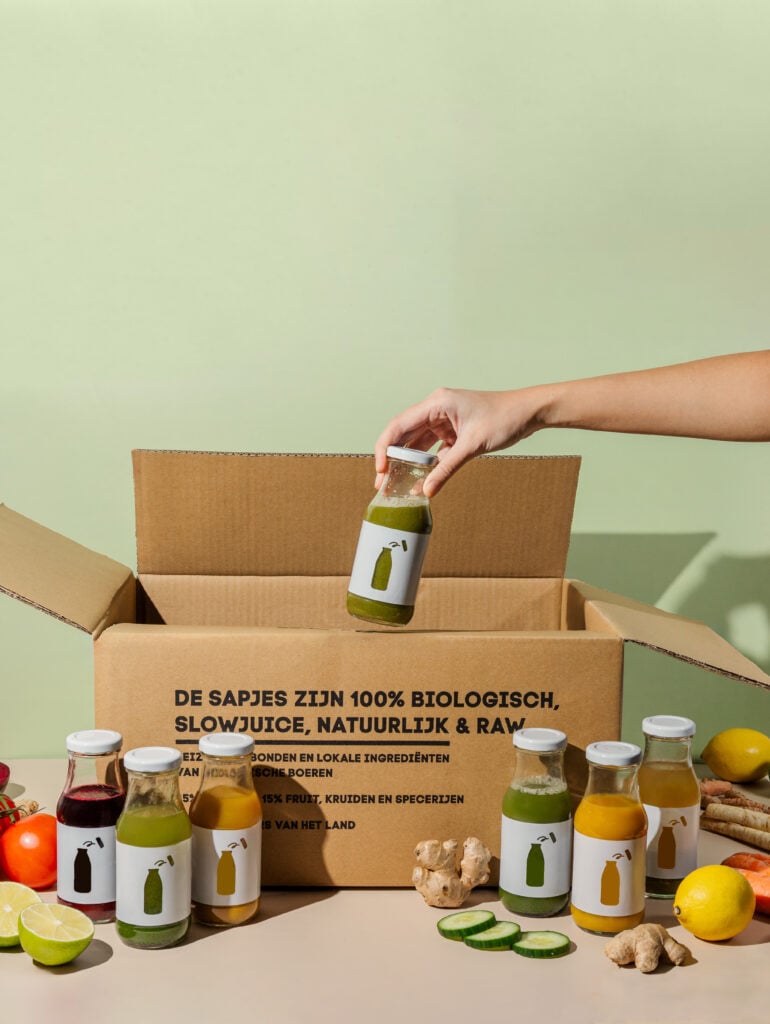
At Sapje, we make every effort to get our vegetable juices to your home as fresh as possible. We do this by freezing the juice in the shock freezer soon after pressing . This best preserves the color, flavor and aroma, as well as the many nutrients. We have discovered that freezing juice produces the highest quality; even better than if we delivered fresh. Read on and find out why!
But first: what is conservation anyway?
Preservation is a name for various methods by which you make foods last longer, for example. To achieve this goal, microorganisms such as bacteria, fungi, viruses and yeasts must be controlled. This can be done in various ways, such as heating food (pasteurization), cooling or freezing it, adding preservatives or exposing it to very high water pressure (high pressure processing or pascalization). Other methods include adding a lot of salt, acid or sugar, but since this comes at the expense of flavor and health value, we rejected these immediately. In addition, we strive for the purest product possible, so adding preservatives was not an option for us either. Below you can read more about pasteurization, high pressure processing and freezing.
Pasteurization
Pasteurization is a way of making juices last longer by heating. Usually the liquid is heated for a short time to a temperature higher than 72 degrees Celsius. This is a good way to kill fast-growing bacteria, but some bacteria can still survive the heating. As a result, pasteurized juice only keeps for a certain amount of time and must be kept refrigerated. Another disadvantage of this preservation method is that it changes the cell structure of the juice and leads to the loss of certain vitamins, minerals and enzymes. Since we want to preserve as many nutrients as possible from our fresh vegetables, we didn’t think pasteurization was the best method.
HPP (high pressure processing, or pascalization)
HPP is a fairly new method of preservation in which foods are exposed to very high water pressure in large machines. Most microorganisms such as bacteria and fungi cannot withstand this high pressure and die from it. The same may be true for healthy organisms, nutrients and enzymes. You can find more and more juices in supermarkets that have undergone HPP. These are touted as “fresh” and can be stored in the refrigerator for weeks. A disadvantage of this is that there can be a lot of time between the time of preservation and the time of consumption. During that time, the juice can still lose many nutrients due to exposure to light, oxygen and time. Usually the nutrients are greatly reduced after a few days. If you drink the juice even later, you are basically just ingesting empty calories. Although HPP produces better results than pasteurization, we at Sapje thought there was still room for improvement.
Freezing (Shockfreezing)
At Sapje, we believe that freezing our juices is the best way to keep them tasty and healthy for as long as possible. After we get the ingredients delivered fresh, we slowjuice them as quickly as possible. This is done in a refrigerated environment to prevent loss of nutrients. Then the juices go straight into the shock freezer. In there, they are deep frozen in just one hour. Freezing prevents microorganisms from growing: time actually comes to a standstill. When frozen, the juices can stay fresh for up to a year. In nature, frozen organisms also retain their life force. Therefore, once thawed, our juices are as tasty and healthy as just after pressing. Of course, it is important that you drink them as soon as possible after thawing to take full advantage of this. The only thing better than frozen juices are fresh juices that you have squeezed yourself at home and then drink immediately. If you don’t have time or energy for that, our juices are the best alternative!
What about fresh rendition?
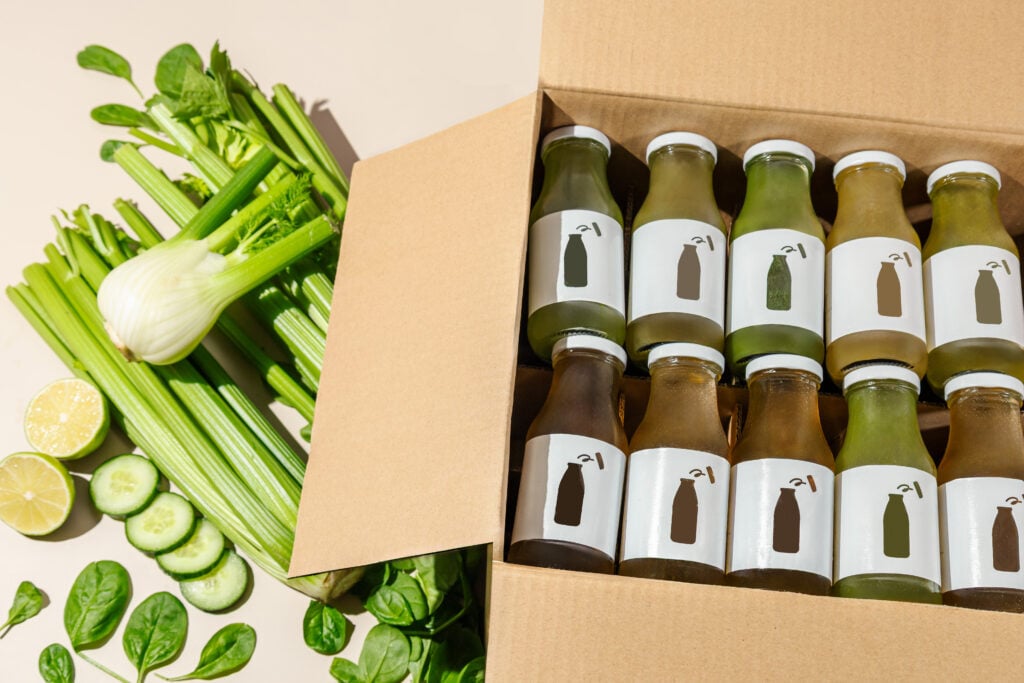
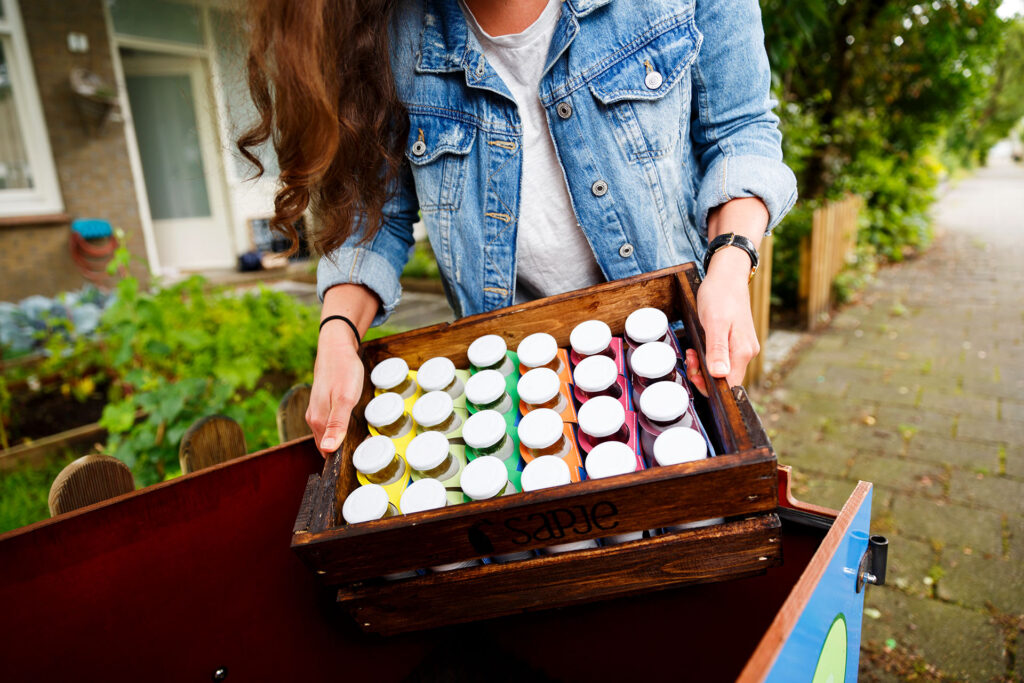
When we just started making fresh vegetable juices and our detox, we delivered them fresh to a small group of interested people in the neighborhood. That went fine with the cargo bike, but when our customer base started to grow, we had to find another solution. Our customers are now spread all over the Netherlands and Belgium, so the juices take longer to deliver. If we were to deliver them fresh, they could lose nutritional value through exposure to light, oxygen and time on the road. Moreover, they would have to be drunk immediately upon arrival for the best results. But then you wouldn’t easily order several bottles at once, even though it would be so convenient and also more sustainable. After all, we would have to drive less often. You can keep the frozen bottles in your freezer until you have time to enjoy them. This way you always have fresh vegetable juice at your convenience!
Why do you freeze the juices?
Freezing stops microorganisms from growing: time actually comes to a standstill. As a result, the color, flavor and aroma, as well as many nutrients, are best preserved. We have found that freezing juices produces the highest quality; even better than having them delivered to you fresh.
We use a special method for freezing our juices: shock freezing. Want to know what this is? We explain it in detail at the top of the page.